
It was women who unambiguously bore the brunt of the lockdown joblessness, says Kanika Datta.

Militant labour policies compounded a poor security environment for capital in West Bengal and encouraged the business community to relocate. constraining the private sector's right to hire freely could well be the coup de grace. As with Calcutta/Kolkata, it will probably take a decade for Gurgaon/Gurugram to feel the difference, says Kanika Datta.
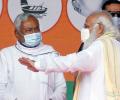
Over the next five years, it will be Narendra not Nitish who will be under pressure to deliver vikas and atmanirbharta in Bihar, notes Kanika Datta.
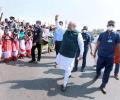
Shifting positions on religiosity and Covid may confuse the Hindutva citizenry, but you can rely on Bengal to turn a non-arguable issue into a raging controversy, notes Kanika Datta.
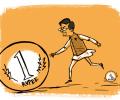
Piyush Goyal's comments about Amazon founder Jeff Bezos's investment in India reveals an inability to understand how businesses function, says Kanika Datta.

The centrality of idle office chitchat has only recently come to be acknowledged by executives as they jettison their access cards and work from home in larger numbers, notes Kanika Datta.

India's innately hierarchy-prone corporate culture produces its share of willing sycophants, says Kanika Datta.

'It is inconceivable that there are no gays working in Indian corporations but obviously, the subject remains taboo enough in the workplace for those of alternate sexual orientation to feel safer remaining in the closet,' notes Kanika Datta.

'With more and more young people relocating outside their home states for work, an all-India MLDA of 21 would be a good way to ensure that more Indians can go with the flow,' recommends Kanika Datta.

She faced off against former disciple-turned-defector Suvendu Adhikari in a very different contest. It's not land acquisition, but an ego clash that has acquired, tragically, communal overtones, explains Kanika Datta.

Overt displays of physical machismo is the stamp of the strongman and it's a symptom that manifests itself in direct proportion to their sense of insecurity, says Kanika Datta.

'All these incidents go to show that the day of the anodyne, apolitical corporation is running out fast,' says Kanika Datta.

If the finance minister's tax proposals have stimulated demand at all, it's for CAs, notes Kanika Datta.

Indian Matchmaking has clearly been produced to pander to Western audiences's awful fascination with the institution of arranged marriage, notes Kanika Datta.

SEZs account for just about a third of India's merchandise exports (and roughly the same proportion of services exports). Yet, the notion of creating global manufacturing centres of the kind that propelled China to superpowerdom retains a durable appeal within the Indian policy-making establishment, notes Kanika Datta.
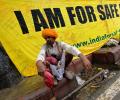
India is capable of developing GM crops, Randy Hautea, global coordinator for International Service for the Acquisition of Agri-Biotech Applications, tells Kanika Datta.
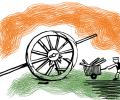
'If the government was serious about co-opting the corporate sector meaningfully in the fight against COVID-19, it could have specified activities beyond cheque-writing,' notes Kanika Datta.

Unlike the Germans, Britons began to face the hard truths about their colonial empire only recently.
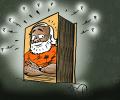
For a PM who hasn't completed even one term yet, the ability to spark a publishing trend single-handed is a remarkable achievement, writes Kanika Datta.

'#metoo has put front and centre an issue that society has suppressed for far too long,' says Kanika Datta.

'LinkedIn is supposed to be this super-connected social media network for professionals that I reluctantly joined at the persistence of a former colleague appalled at my lack of self-promotion.' 'Well, I'm out there and I don't know who knows me, but I do know that LinkedIn's algorithm definitely doesn't,' says Kanika Datta.
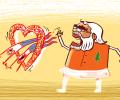
We Indians simply cherry-pick those aspects of other cultures we like and reject what we consider unsuitable. Most of us recognise it as globalisation, says Kanika Datta.
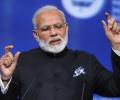
The question is whether Prime Minister Modi can convince the world's investors that India is the ultimate investment destination of 2018, says Kanika Datta.


'There is a certain irony embedded in this asymmetric geographical distribution of FDI because most state leaders have shed their inhibitions about promoting 'business' and have understood its virtues as a more cost-effective way of replacing the mai-baap welfarism that passed for economic policy till the early nineties', says Kanika Datta.

Global investment is agnostic when it comes to nationalism, says Kanika Datta.

While Bollywood stepped out for the Star Screen awards, telly folk attended the Zee Rishtey awards.

Physical security for women, the first step towards getting them into factories and offices, is all but absent in most Indian cities, notes Kanika Datta.

Technology can certainly gain India membership in the comity of modern nations in the 21st century.

Kanika Datta visits the crumbling but oddly appealing complex of Bagan - a place where even an atheist can come close to a divine experience.

We don't know what percentage of new fathers in the Indian corporate sector take their parental responsibilities seriously enough to use the leave, says Kanika Datta.
Repeated surveys have shown that India is among the world's top vacation-deprived countries. Kanika Datta reflects on our work-life balance - the lack thereof that is.

Asking employees whether they would prefer to work under a man or woman amounts to asking them to discriminate, positively or negatively, on the basis of gender.

Kanika Datta reflects on Indians and our relationship with snaking queues from the license raj to demonetisation.

The distinction between "cheap" and "affordable" is a fine one, but no one understands this better than India's aspirational first-time car-owner, says Kanika Datta.

With so much bad news, everybody is hunkering down in readiness for Mr Modi's next radical Big Idea, says Kanika Datta.

Industrialists have the same complaints as they did in the UPA's second stint.

'The existence of Section 295A on the Indian statute books sits uneasily with India's ambitions to be seen as a progressive democracy,' says Kanika Datta.

The South Delhi Municipal Corporation's decision to make washrooms in hotels and eateries open to the public for a fee highlights India's failure to expand access to toilet facilities.

Are we creeping back to controls on corporate decision making? Three moves over the past eight months reinforce this notion, says Kanika Datta.
